
Who evaluates an ADU — and how
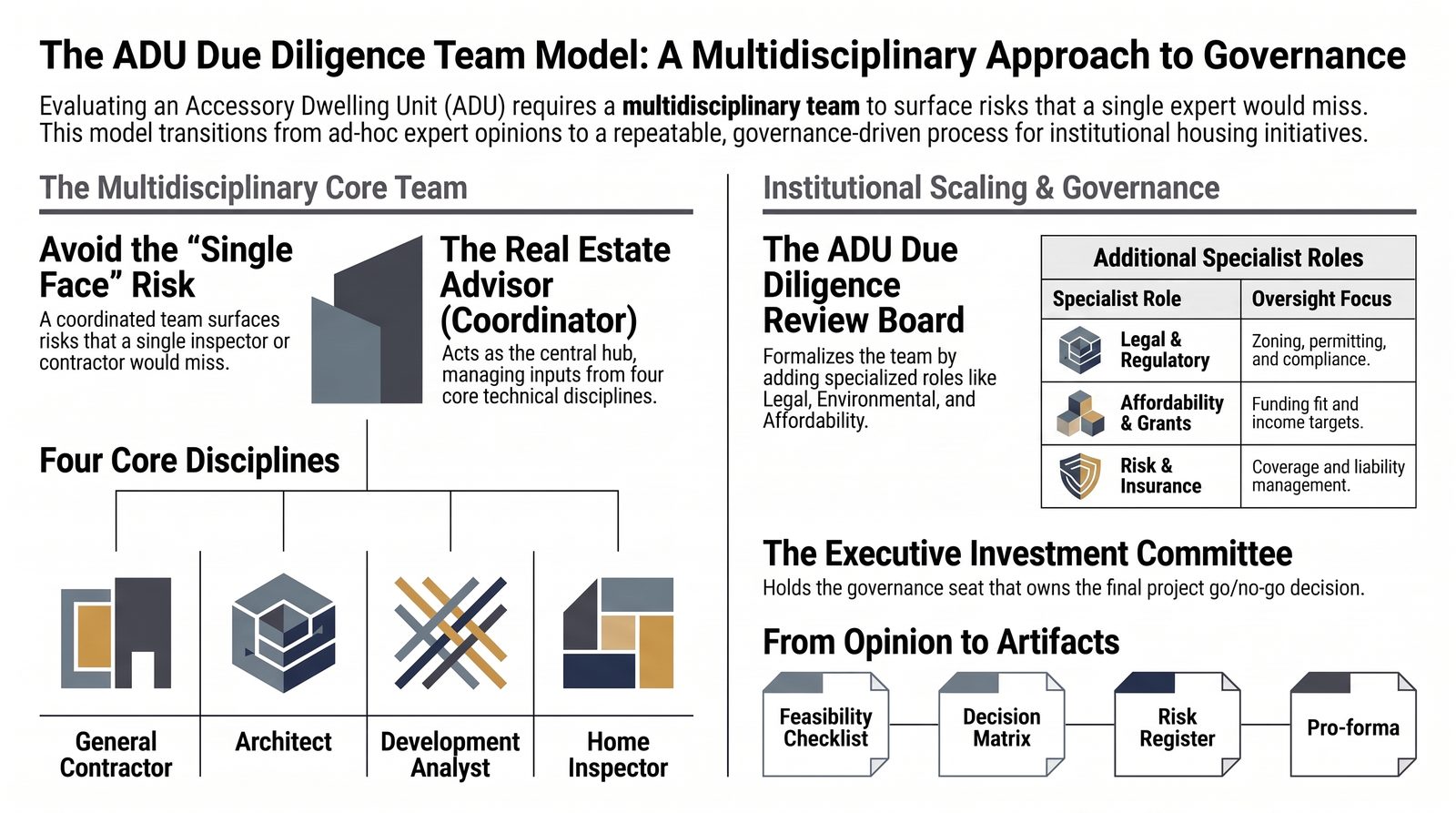
This piece interprets a slide arguing that evaluating an Accessory Dwelling Unit (ADU) should rely on a multidisciplinary due-diligence team, not a single opinion. A Real Estate Advisor coordinates four core disciplines.
For an institutional or nonprofit housing initiative like LCDC, it recommends expanding that group into a formal ADU Due Diligence Review Board — adding the specialist roles a governed organization needs.
It then maps the team onto the standardized toolkit artifacts, so the whole process becomes repeatable and governance-driven rather than ad hoc.
The core team — one coordinator, four disciplines
The ADU Due Diligence Review Board
A nonprofit or institutional developer like LCDC formalizes the core team into a standing board — adding the specialist and governance roles a mission-driven, grant-funded organization is accountable for.
The board feeds the toolkit's five artifacts
Each discipline's findings flow into the standardized instruments from the ADU Toolkit — turning expert opinion into a documented, governance-driven decision.
Lives in the Housing module as organizational design — the people-and-roles companion to the ADU Toolkit's instruments. The Toolkit defines what to evaluate; this model defines who evaluates it and how the decision is governed.
This anchor is a draft until leadership shapes it. As you read:
- Who sits on the team today — and which seat is empty?
- Who has final say when the team disagrees?
- How often should the team meet to keep a project moving?